Wound Healing & Tissue Repair
TB-500 dermal wound healing, epithelial cell migration, and cutaneous tissue regeneration research
TB-500 in Wound Healing Research
Skin wound healing proceeds through four overlapping phases: hemostasis, inflammation, proliferation, and remodeling. Thymosin beta-4 (Tβ4), delivered as TB-500, has documented research activity across all four phases, making it one of the most extensively studied peptides in the wound healing field. The initial discovery by Malinda et al. (1999, J. Investigative Dermatology) that Tβ4 accelerated full-thickness wound healing in animal models catalyzed a substantial research effort that continues today.
Keratinocyte Migration: The Driving Force of Re-Epithelialization
Wound closure depends on keratinocyte migration across the wound bed — a process that requires coordinated cytoskeletal remodeling exactly the type mediated by Tβ4's G-actin sequestering function. Research findings include:
- Tβ4 stimulates keratinocyte migration in scratch wound assays at concentrations of 10–100 ng/mL (Malinda et al., 1997)
- The LKKTET hexapeptide fragment is sufficient to stimulate migration, implicating the WH2 actin-binding domain as the active motif
- Tβ4-treated keratinocytes show increased lamellipodia formation and enhanced MMP-9 (gelatinase B) secretion for basement membrane traversal
- In full-thickness excisional wound models, Tβ4 treatment reduces time to complete re-epithelialization by 20–30% compared to vehicle controls
Dermal Fibroblast Activation
Parallel to epithelial migration, dermal fibroblasts populate the wound bed, synthesize new extracellular matrix, and eventually differentiate into myofibroblasts for wound contraction. TB-500 modulates fibroblast activity through:
- Promotion of fibroblast migration and proliferation toward the wound center
- Upregulation of fibronectin, laminin-5, and collagen type III (early wound matrix components)
- Transitional support for myofibroblast differentiation (α-SMA expression) during contraction phase, followed by modulation to prevent excessive fibrosis during remodeling
- Activation of the PI3K/Akt/mTOR axis in fibroblasts, promoting survival and biosynthetic capacity in the hypoxic wound environment
Angiogenesis and Granulation Tissue Formation
Granulation tissue — the provisional matrix that fills the wound space — depends critically on new blood vessel formation (angiogenesis). TB-500 promotes wound angiogenesis through:
- VEGF upregulation in hypoxic wound-bed keratinocytes and fibroblasts
- Endothelial cell migration and tube formation in Matrigel assays at Tβ4 concentrations of 100 ng/mL–1 µg/mL
- HIF-1α stabilization under wound hypoxia, amplifying VEGF transcription
- Integration with angiopoietin-Tie2 signaling for vessel maturation and stabilization
Anti-Inflammatory Phase Regulation
Excessive or prolonged inflammation impairs wound healing and promotes chronic wound pathology. TB-500's NF-κB suppression activity contributes to:
- Timely resolution of the inflammatory phase (days 1–4) without premature suppression of necessary pathogen clearance
- Reduction in MMP-8 (neutrophil collagenase) that degrades provisional matrix if chronically elevated
- Modulation of TGF-β1/TGF-β3 balance — TGF-β3 promotes scarless (fetal-type) wound healing while TGF-β1 drives fibrosis
Diabetic and Impaired Wound Healing Models
Diabetic wound healing is impaired by reduced keratinocyte migration, poor angiogenesis, and chronic inflammation. TB-500 has been studied in:
- Streptozotocin-induced diabetic rat wounds: 35–45% faster wound closure with Tβ4 treatment
- db/db mouse excisional wounds: improved re-epithelialization and granulation tissue scores
- Ischemic flap models: reduced necrosis area by ~30% with systemic Tβ4 administration
Topical vs. Systemic Delivery Research
Tβ4 and TB-500 have been studied via both topical (aqueous gel, gel-cream formulations) and systemic (SC, IP) delivery routes for wound healing:
- Topical application achieves high local concentrations with minimal systemic exposure
- Systemic delivery may be more appropriate when wound healing is part of a broader systemic repair process
- RGN-352 (topical Tβ4) has reached clinical trial stages for wound healing indications, providing translational validation of preclinical findings
High-Purity Wound Healing & Tissue Repair
>98% purity, third-party tested. Free shipping on orders over $200.
Wound Healing & Tissue Repair — Available Products
Research-grade compounds from our trusted research supplier. >98% purity, CoA on request.
Looking for Clavicular's Looksmaxxing Stack?
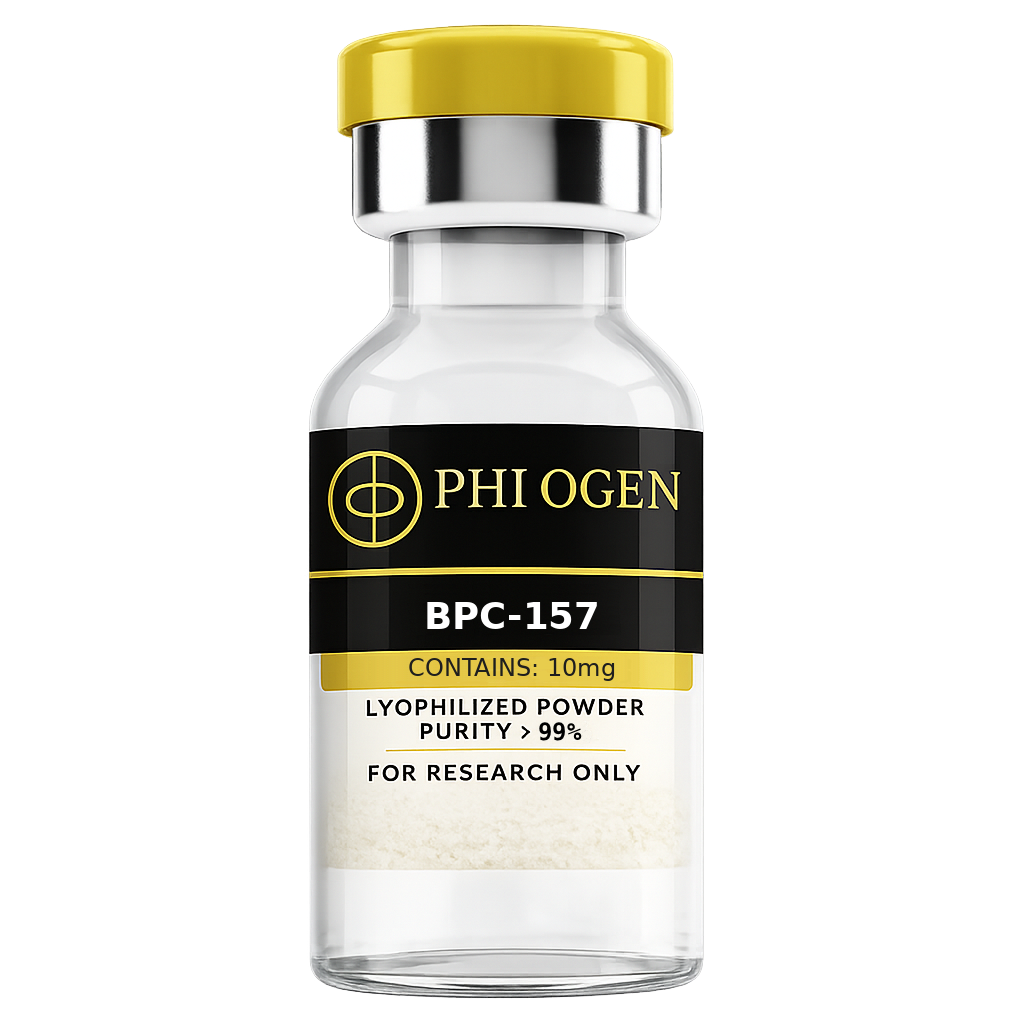
See which peptides Clavicular uses in his viral looksmaxxing transformation — Retatrutide, BPC-157, and more.
Frequently Asked Questions
How does TB-500 accelerate wound healing in animal models?
TB-500 (thymosin beta-4) accelerates wound healing by simultaneously promoting keratinocyte migration (via actin cytoskeletal remodeling), activating dermal fibroblasts for matrix synthesis, stimulating angiogenesis through VEGF upregulation, and suppressing excessive inflammatory signaling via NF-κB inhibition. Excisional wound models report 20–30% reduction in time to complete re-epithelialization compared to vehicle controls.
Does TB-500 require topical application or systemic delivery for wound healing research?
Both routes have documented efficacy in preclinical research. Topical formulations (aqueous gels) achieve high local concentrations relevant to superficial cutaneous wounds. Systemic administration (SC or IP) is used when studying systemic effects or when wound healing is being studied alongside other repair endpoints. The topical Tβ4 formulation RGN-352 has reached clinical trial stages, validating the topical delivery approach.
Does TB-500 have any activity in diabetic wound healing models?
Yes. In streptozotocin-induced diabetic rat wound models, Tβ4 treatment produces 35–45% faster wound closure. In db/db mouse excisional wound models, treated animals show improved re-epithelialization scores and higher granulation tissue density. These impaired-healing models are particularly relevant because the TB-500 mechanisms (promoting keratinocyte migration, angiogenesis, and inflammation resolution) directly address the pathophysiology of diabetic wound healing failure.
What is the minimum effective concentration of TB-500 for keratinocyte migration stimulation?
Published scratch assay data indicate keratinocyte migration stimulation occurs at Tβ4 concentrations as low as 10 ng/mL, with a dose-response relationship up to approximately 100–500 ng/mL. The LKKTET hexapeptide fragment (the WH2 actin-binding motif of Tβ4) is sufficient to stimulate migration, confirming actin-cytoskeletal remodeling as the primary driver of this pro-migratory effect.
How does TB-500 affect the TGF-β balance in wound healing?
TB-500 modulates the TGF-β1/TGF-β3 ratio during wound healing, which is significant because TGF-β1 drives fibrotic scar formation while TGF-β3 promotes more regenerative, scarless healing patterns. By shifting toward TGF-β3 signaling and suppressing TGF-β1-driven collagen overproduction, TB-500 may improve scar quality in addition to accelerating wound closure speed.
Shop Wound Healing & Tissue Repair
Research-grade wound healing & tissue repair from our trusted research supplier. Third-party tested, >98% purity guaranteed.