Recovery Peptide Stacks
TB-500 combined with BPC-157, IGF-1LR3, and CJC-1295 for synergistic research
Rationale for TB-500 Combination Research
Modern peptide research increasingly focuses on combination protocols rather than single-peptide studies, recognizing that tissue repair involves parallel and sequential signaling cascades that can be addressed by peptides with complementary mechanisms. TB-500 (thymosin beta-4) serves as the foundational element in many advanced recovery stacks due to its unique position at the intersection of cytoskeletal dynamics, anti-apoptotic signaling, and anti-inflammatory modulation.
TB-500 + BPC-157: The Foundational Stack
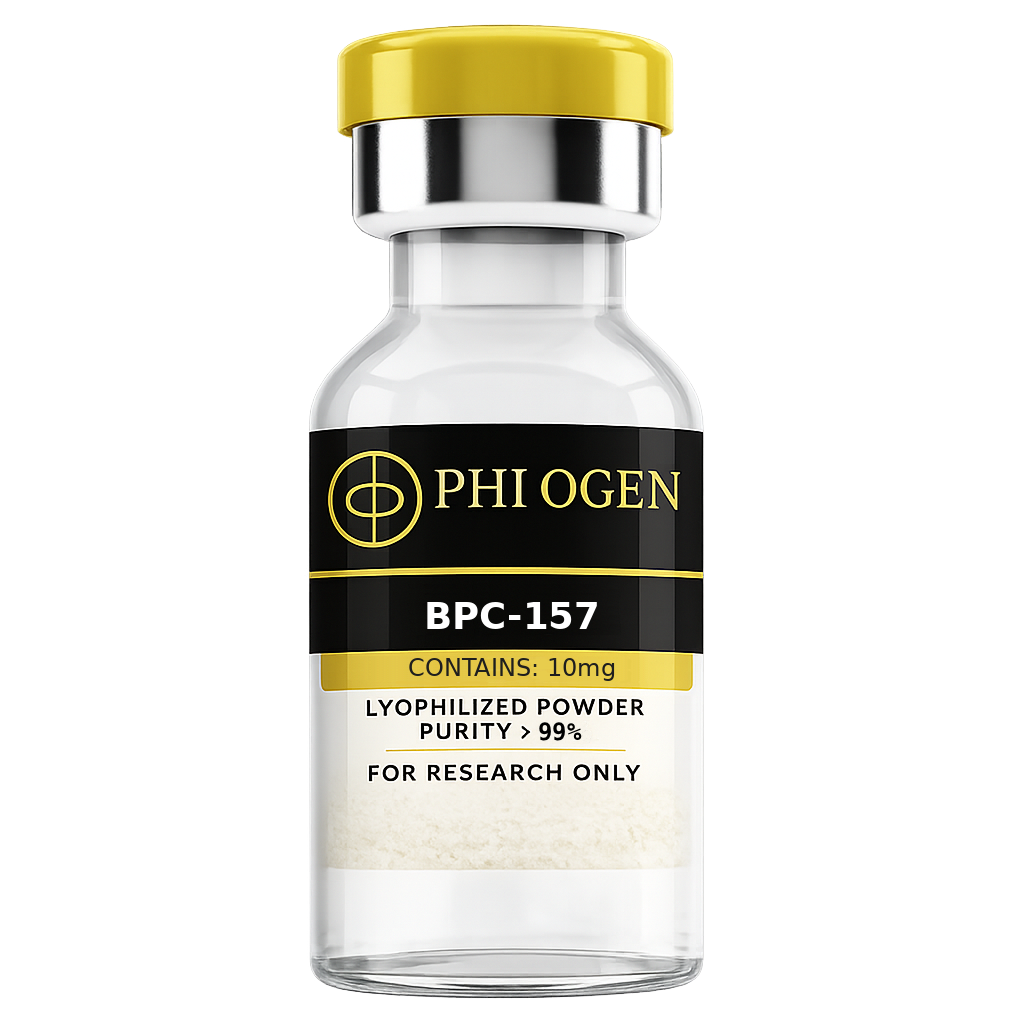
BPC-157 (Body Protection Compound-157) is a synthetic pentadecapeptide derived from human gastric juice protein BPC. It has been shown to promote healing through:
- Angiogenesis: upregulation of VEGF and eNOS, distinct from Tβ4's epicardial progenitor-mediated vascularization
- Tendon and ligament repair: activation of the FAK-paxillin pathway in tenocytes
- Gut mucosal healing: robust cytoprotective effects in GI models
- NO-pathway modulation: distinct from Tβ4's ILK/Akt axis
Research stack parameters commonly investigated:
| Peptide | Typical Research Dose | Route | Frequency |
| TB-500 | 2–5 mg | SC/IM | 2x/week (loading) |
| BPC-157 | 250–500 µg | SC/IM or oral | Daily |
TB-500 + IGF-1LR3: Anabolic-Regenerative Synergy
IGF-1 Long R3 (IGF-1LR3) is a modified IGF-1 analog with reduced IGF-binding protein affinity, resulting in a longer half-life (~20–30 hours vs. ~12–15 minutes for native IGF-1). Its research profile includes:
- Activation of the IGF-1R → PI3K → Akt axis — which converges directly with TB-500's ILK-mediated Akt activation
- Promotion of satellite cell proliferation and myoblast differentiation through IGF-1R/mTORC1 signaling
- Stimulation of Type I collagen synthesis in fibroblasts and tenocytes
- IGF-1LR3 is studied at doses of 20–100 µg/day in rodent models
TB-500 + CJC-1295/Ipamorelin: Growth Hormone Axis Integration
CJC-1295 (a GHRH analog) and Ipamorelin (a ghrelin mimetic/GHS-R agonist) are commonly combined to stimulate pulsatile growth hormone (GH) secretion from the anterior pituitary. GH subsequently drives hepatic IGF-1 production. This creates an endocrine environment that complements TB-500's local tissue repair mechanisms:
- GH/IGF-1 axis stimulation promotes systemic protein synthesis and lipolysis
- IGF-1 (endogenous, from GH stimulation) activates satellite cells and fibroblasts throughout the body
- TB-500 provides the local cytoskeletal and anti-inflammatory support at injury sites
- Ipamorelin's selectivity (no cortisol or prolactin elevation at research doses) makes it a cleaner GHS for combination protocols
Triple and Quadruple Combination Research
Advanced research protocols may combine TB-500 + BPC-157 + IGF-1LR3 simultaneously, targeting:
- Phase 1 (acute injury, days 1–14): TB-500 + BPC-157 for inflammation control, angiogenesis, and matrix remodeling
- Phase 2 (proliferative, days 14–42): Add IGF-1LR3 for satellite cell/fibroblast proliferation amplification
- Phase 3 (remodeling, days 42+): CJC-1295/Ipamorelin for GH-axis supported matrix maturation and strength recovery
Reconstitution and Storage in Stack Research
When preparing multiple peptides for stack research, bacteriostatic water (BAC water) is essential for multi-use vial preparation. Each peptide should be reconstituted and stored separately at 2–8°C, with aliquots drawn at the time of use. Peptide mixtures in a single syringe are not recommended for blinded research protocols.
High-Purity Recovery Peptide Stacks
>98% purity, third-party tested. Free shipping on orders over $200.
Recovery Peptide Stacks — Available Products
Research-grade compounds from our trusted research supplier. >98% purity, CoA on request.
Looking for Clavicular's Looksmaxxing Stack?
See which peptides Clavicular uses in his viral looksmaxxing transformation — Retatrutide, BPC-157, and more.
Frequently Asked Questions
What is the scientific rationale for combining TB-500 with BPC-157?
TB-500 and BPC-157 have complementary but non-overlapping mechanisms. TB-500 targets ILK/Akt anti-apoptotic signaling, NF-κB suppression, actin cytoskeletal dynamics, and epicardial progenitor activation. BPC-157 independently modulates VEGF/eNOS-driven angiogenesis, FAK-paxillin tendon repair signaling, and NO-pathway cytoprotection. Together they address a broader spectrum of the tissue repair cascade.
How do TB-500 and IGF-1LR3 interact at the signaling level?
Both peptides converge on the PI3K/Akt pathway: TB-500 activates Akt through integrin-ILK signaling, while IGF-1LR3 activates Akt through IGF-1 receptor tyrosine kinase signaling. This dual-input convergence may produce greater and more sustained Akt activation than either peptide alone, with downstream effects including enhanced satellite cell proliferation, reduced apoptosis, and increased protein synthesis.
What is the role of CJC-1295/Ipamorelin in a TB-500 stack?
CJC-1295/Ipamorelin stimulates pulsatile GH secretion and sustained IGF-1 elevation, creating a systemic anabolic and repair-permissive hormonal environment. TB-500 then provides local injury-site actions (cytoskeletal remodeling, anti-inflammation, satellite cell recruitment) that complement the broad systemic protein synthesis and lipolytic effects of GH/IGF-1 axis activation.
Can TB-500 be mixed with other peptides in the same syringe for research?
Mixing peptides in a single syringe is generally not recommended for rigorous research protocols because it prevents blinded administration, complicates dose verification, and may introduce pH or stability incompatibilities. For mechanistic studies, peptides should be reconstituted separately in BAC water and administered sequentially from individual syringes.
What is a typical phased research protocol for a TB-500 + BPC-157 + IGF-1LR3 stack?
A common phased design uses TB-500 + BPC-157 in the acute phase (days 1–14) to control inflammation and initiate vascular and matrix remodeling, adds IGF-1LR3 in the proliferative phase (days 14–42) to amplify satellite cell and fibroblast activity, and transitions to CJC-1295/Ipamorelin in the remodeling phase (days 42+) to support GH-axis-driven matrix maturation. Each phase targets the dominant repair biology of that timeframe.
Shop Recovery Peptide Stacks
Research-grade recovery peptide stacks from our trusted research supplier. Third-party tested, >98% purity guaranteed.