Tendon & Ligament Research
TB-500 mechanisms in tendon and ligament repair, tenocyte migration, and collagen matrix remodeling research
TB-500 in Tendon and Ligament Repair Research
Tendons and ligaments are dense connective tissues with poor intrinsic vascularity and limited regenerative capacity, making injury recovery a slow and often incomplete process. The hypovascular nature of these tissues creates a therapeutic rationale for peptides that promote angiogenesis, tenocyte activation, and collagen matrix remodeling — all documented properties of thymosin beta-4 (Tβ4), the parent molecule of TB-500.
Tenocyte Biology and Tβ4 Signaling
Tenocytes (tendon fibroblasts) are the primary cellular mediators of tendon repair. Research using Tβ4 in tenocyte culture systems has demonstrated:
- Enhanced tenocyte migration in scratch wound assays, with chemotactic responses at Tβ4 concentrations of 10–100 ng/mL
- Upregulation of scleraxis (Scx) — the master transcription factor of tenocyte differentiation
- Increased expression of tenascin-C and tenomodulin (Tnmd), both markers of mature tenocyte phenotype
- Suppression of apoptosis in ischemia-exposed tenocytes via the ILK/Akt survival pathway
Collagen Matrix Remodeling
Type I collagen constitutes >95% of tendon dry weight, and its proper synthesis, cross-linking, and alignment are essential for mechanical strength restoration. TB-500 research in tendon models has documented:
- Increased type I procollagen mRNA expression in Tβ4-treated tenocyte cultures (by 1.8–2.4 fold over controls)
- Modulation of lysyl oxidase (LOX) — the enzyme responsible for collagen cross-linking and mechanical maturation
- Regulation of MMP-1, MMP-3, and MMP-13 (collagenases and stromelysins) and their inhibitors (TIMP-1, TIMP-2), determining net matrix remodeling direction
- Improved collagen fiber alignment scores in histological assessments of Tβ4-treated tendon repair tissue
Angiogenesis in Hypovascular Tendon Tissue
One of the most critical challenges in tendon repair is establishing adequate vascular supply in the avascular or hypovascular midsubstance regions. TB-500 promotes tendon vascularization through:
- Upregulation of VEGF-A and angiopoietin-1 in tenocytes and peritendinous fibroblasts
- Stimulation of endothelial cell migration toward hypoxic tendon tissue
- Formation of capillary networks that support the metabolic demands of the proliferative repair phase
Inflammatory Modulation in Tendinopathy Models
Chronic tendinopathy involves dysregulated inflammation with excessive substance P, IL-1β, and COX-2 expression. TB-500 addresses this through:
- NF-κB pathway suppression reducing IL-1β and TNF-α production by infiltrating macrophages
- Decreased substance P and CGRP neuropeptide expression in peritendinous neural elements
- Reduction in degenerative changes (mucoid degeneration score, neovascularization index) in chronic Achilles tendinopathy models
Research Protocols in Tendon Injury Models
Published experimental designs for TB-500 tendon research include:
| Model | Species | TB-500 Protocol | Key Endpoint |
| Achilles tenotomy | Rat | 0.1–1 mg/kg SC, 2x/week | Failure load (N), histology |
| Patellar tendon window | Rabbit | 0.5 mg/kg IM, weekly | Collagen organization |
| Flexor digitorum tendon | Mouse | 2 µg local injection | Tenocyte density, CD31 |
| Supraspinatus tear | Rat | 2 mg/kg SC, 3x/week | Cross-sectional area |
Combination with BPC-157 for Tendon Research
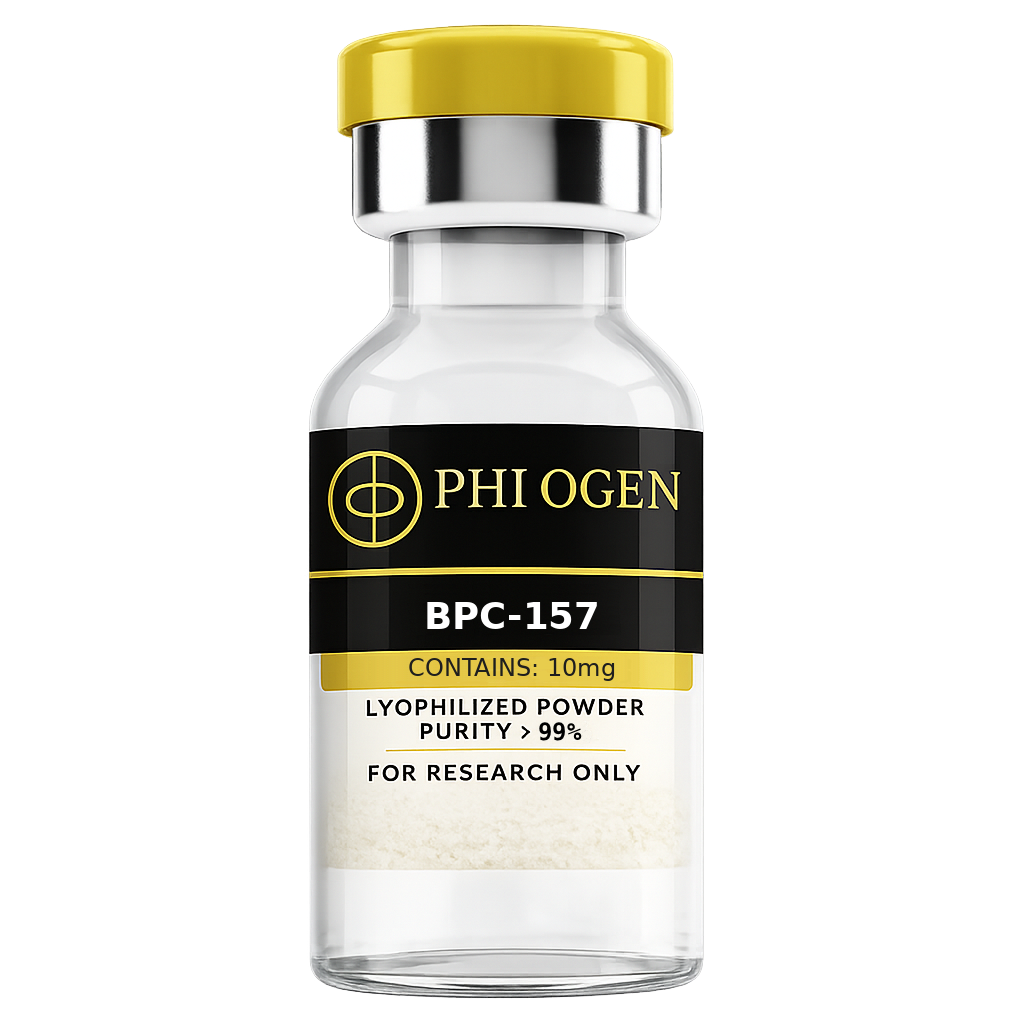
BPC-157 has perhaps the strongest published literature base for tendon repair among research peptides, with documented effects on FAK-paxillin signaling in tenocytes, direct collagen organization, and ligament healing in in vivo models. The complementary mechanisms of TB-500 (anti-inflammatory, pro-migratory, angiogenic via VEGF) and BPC-157 (FAK-paxillin mechanical signaling, NO-pathway) have driven significant research interest in combined protocols for severe tendon injury models.
High-Purity Tendon & Ligament Research
>98% purity, third-party tested. Free shipping on orders over $200.
Tendon & Ligament Research — Available Products
Research-grade compounds from our trusted research supplier. >98% purity, CoA on request.
Looking for Clavicular's Looksmaxxing Stack?
See which peptides Clavicular uses in his viral looksmaxxing transformation — Retatrutide, BPC-157, and more.
Frequently Asked Questions
How does TB-500 promote tenocyte activity in tendon repair research?
TB-500 (thymosin beta-4) promotes tenocyte migration via LKKTET actin-binding motif-driven cytoskeletal remodeling, upregulates the master tenocyte transcription factor scleraxis (Scx), increases tenascin-C and tenomodulin expression, and suppresses tenocyte apoptosis via ILK/Akt signaling. Chemotactic migration responses are observed at concentrations as low as 10 ng/mL in scratch assay models.
Does TB-500 increase collagen production in tendon tissue?
Research shows TB-500 increases type I procollagen mRNA expression by 1.8–2.4 fold in tenocyte cultures, modulates lysyl oxidase activity for collagen cross-linking maturation, and improves histological collagen fiber alignment scores in tendon repair tissue. MMP/TIMP regulation by TB-500 further shifts the matrix environment toward net collagen deposition.
Why is angiogenesis important in tendon repair, and how does TB-500 address it?
Tendons are poorly vascularized, meaning the metabolic and cellular resources needed for repair must be supplied by new vessel formation. TB-500 upregulates VEGF-A and angiopoietin-1, stimulates endothelial cell migration into hypoxic tendon regions, and increases CD31+ capillary density by 1.5–2 fold at repair sites in animal models, addressing the vascular deficit that limits spontaneous tendon healing.
Is TB-500 used in research for chronic tendinopathy or only acute tendon tears?
TB-500 has research relevance for both. In chronic tendinopathy models, its NF-κB suppression reduces the pro-inflammatory cytokine (IL-1β, TNF-α) and neuropeptide (substance P, CGRP) milieu that drives degenerative changes. In acute tear models, it promotes tenocyte proliferation, collagen synthesis, and angiogenesis during the repair phase.
What is the scientific rationale for combining TB-500 with BPC-157 for tendon research?
TB-500 provides anti-inflammatory NF-κB suppression, VEGF-mediated angiogenesis, and actin-cytoskeleton-driven tenocyte migration. BPC-157 independently activates the FAK-paxillin mechanosignaling pathway in tenocytes and has robust published evidence for direct tendon-to-bone healing in rotator cuff and ligament models. Their complementary signaling pathways make combined protocols a logical research design for severe connective tissue injury studies.
Shop Tendon & Ligament Research
Research-grade tendon & ligament research from our trusted research supplier. Third-party tested, >98% purity guaranteed.